

ARTICLE 2 OF 4 · PUBLISH JUNE 10, 2026 · SAFETY
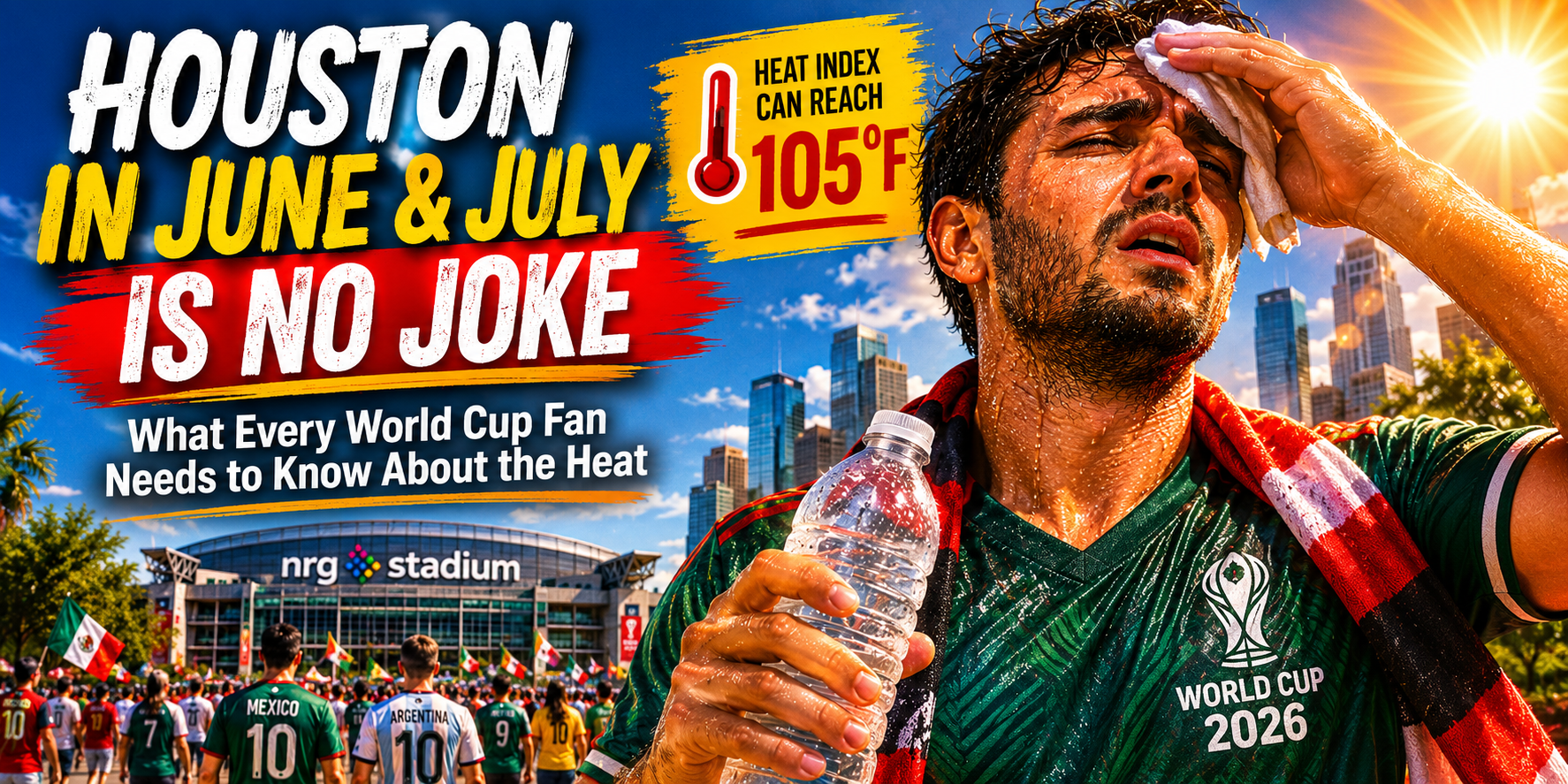
Houston in June & July Is No Joke: What Every World Cup Fan Needs to Know About the Heat
94°F. 70% humidity. A heat index that can hit 105°F. This is what you’re walking into.
If you are flying to Houston for the World Cup, heat is probably not the thing keeping you up at night. Your team’s group stage bracket is, as well as other things like hotel logistics, places to eat, and so on.
But I treat patients in this city. And every summer, I see people including locals, not just visitors who underestimate what the Houston heat in June and July actually does to a body. The humidity makes 94°F feel like 105°F. That’s not a fun statistic. It’s a clinical one.
Here’s what you need to know.
Heat Exhaustion vs. Heat Stroke: These Are Not the Same Thing
Heat exhaustion means your body is struggling but still fighting. Heavy sweating, pale or clammy skin, dizziness, nausea, weakness, headache. The sweating is actually a good sign that your cooling system is still working. Get to air conditioning, drink water or an electrolyte drink, take off excess layers. If you are not better in 30 minutes, go to an urgent care facility.
STOP. CALL 911. If someone stops sweating in the heat, has hot dry skin, becomes confused, stops responding, or has a seizure — that is heat stroke. It is a medical emergency. Do not drive them. Call 911, get them to shade or AC, and put ice on the neck, armpits, and groin while you wait. Heat stroke can kill in under an hour without intervention.
Heat stroke is what happens when the body’s cooling system fails entirely. Once you are there, organ damage follows fast. The difference between the two conditions can close quickly, which is why the warning signs matter.
Who Needs to Pay Extra Attention
- Anyone over 65 — the body’s temperature regulation slows with age
- People with heart disease, diabetes, kidney disease, or high blood pressure
- Anyone on diuretics, beta-blockers, antihistamines, or antipsychotics — these drugs interfere with how your body handles heat
- Visitors from cooler or drier climates, which is most international fans
- Anyone drinking alcohol outdoors
If you are in more than one of those categories, the tips below are not optional.
What Actually Helps on Match Days
Start drinking water before you are thirsty. Thirst is a lagging signal. By the time you feel it in this heat, you’re already behind. Aim for 16-24 oz per hour outdoors. Electrolyte drinks (Gatorade, Powerade) help replace what sweat takes out, especially during long outdoor stretches.
The danger is not always inside the stadium. It’s the two hours before kickoff, standing in line, walking in the parking lots, sitting in fan zones and so on in the Houston midday heat. Plan your arrival time around minimizing that exposure, or use rideshare to cut it short.
Wear something light. Light colored, loose, moisture-wicking fabric. A wide brimmed hat. Sunglasses. Your team jersey is great for the photo; it’s terrible for four hours in the Houston sun.
Find the medical station when you arrive. NRG Stadium has medical staff on site. Take 30 seconds at your gate to note where the nearest first aid station is. It’s much harder to find that information when someone actually needs it.
Watch the people around you. Heat illness can look like someone just being quiet or a little off. If someone near you stops making sense or goes unusually still, don’t wait to see if they bounce back.
On Alcohol
Alcohol makes you urinate more fluid than you are taking in. Three beers in the Houston sun is dehydrating, full stop. Matching each drink with a glass of water helps. Being honest with yourself about how much you are drinking in that environment helps more.
30-SECOND VERSION Drink water before you are thirsty. Wear light clothes. Know where the medical station is. If someone stops sweating and acts confused, call 911 immediately.
Most fans will have no issues at all. NRG Stadium’s medical team is experienced and prepared. But the people who end up in trouble are almost always the ones who thought the heat would not be a problem for them specifically. It’s a good match to stay cool for. Literally.
ABOUT THE AUTHOR
Dr. Basil Nduma, MD, MSHI is an internal medicine physician and founder of Texas Integrated Care Group (TICG), an internal medicine practice in the Conroe, Woodlands, and Montgomery County area focused on medically complex adults. TICG handles post-discharge care, chronic disease management, and telehealth visits. texasintegratedcaregroup.com.