

PUBLISH JUNE 18, 2026 · SLEEP HEALTH
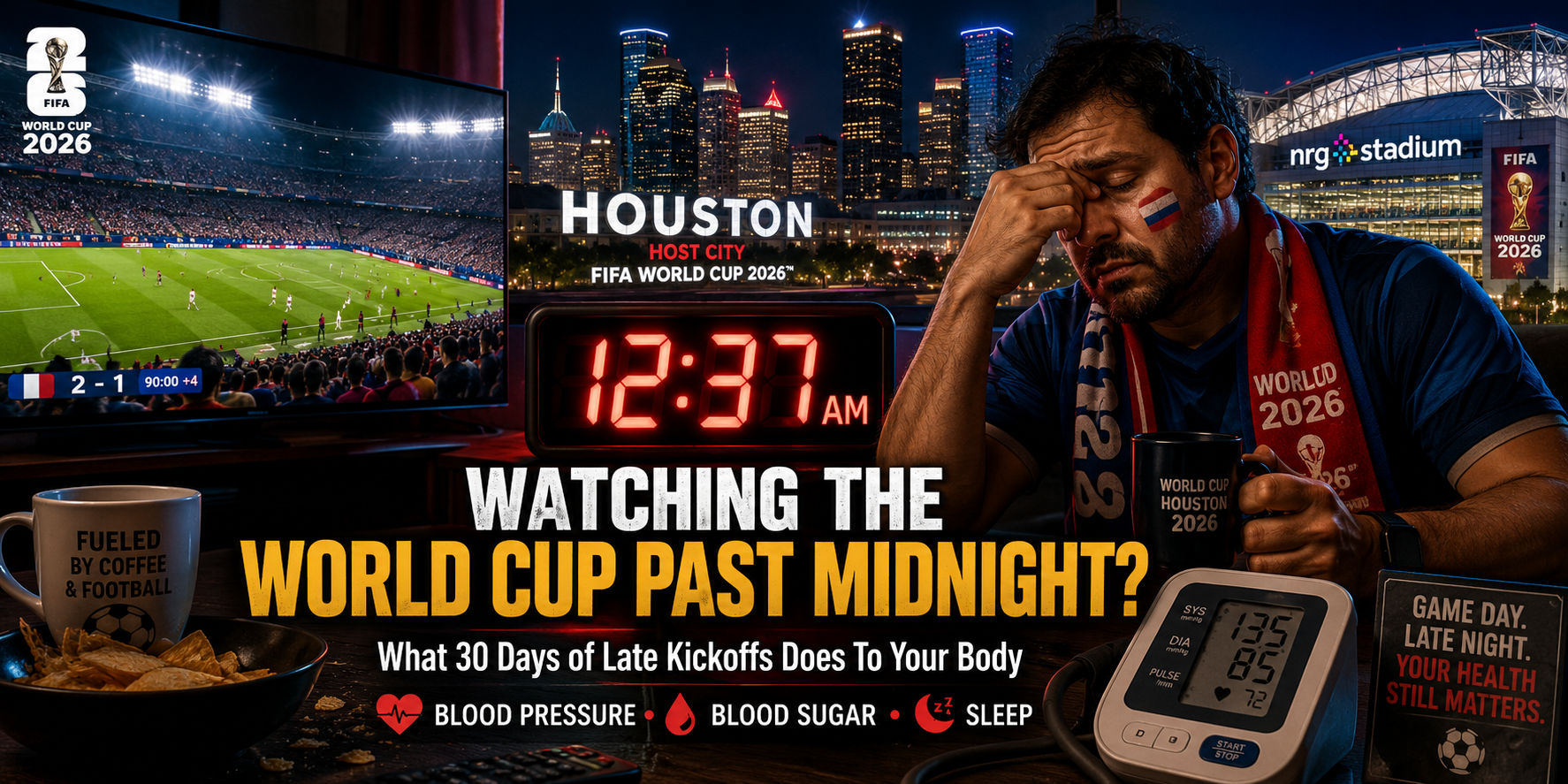
Watching the World Cup Past Midnight? What a Month of Late Kickoffs Does to Your Body.
A lot of the best games are kicking off at 9 p.m. and not finishing until well after midnight. If you’re following your team, you already know the routine. You tell yourself you’ll catch the highlights tomorrow, and then you don’t, because watching it live is the whole point.
One late night is nothing. Your body shrugs it off. But the group stage runs for weeks, and if you’re watching most nights, you’re not having one late night. You’re slowly dragging your whole sleep schedule into the small hours. That part adds up, and most people don’t notice until they already feel terrible.
Here’s what’s actually happening, and how to enjoy the football without paying for it later.
Late games are worse for sleep than late nights usually are
Staying up late to read a book is one thing. Staying up for a match is different. A close game keeps your heart rate up and your adrenaline running right when your body is supposed to be winding down. Then the final whistle blows and you try to fall asleep on top of all that. It doesn’t work well, and even when you do drop off, the sleep tends to be lighter and less restful.
Do that a few nights a week for a month and your body clock shifts. You’re tired in the afternoon, wide awake at midnight, and leaning on coffee to get through the day. The coffee then makes the next night’s sleep worse. It feeds itself.
Why this matters more if you have a chronic condition
If your health is generally fine, a rough month of sleep will leave you groggy and irritable, and then you’ll recover. Annoying, not dangerous.
If you have high blood pressure, diabetes, or heart disease, the math changes. Short sleep pushes blood pressure up and makes blood sugar harder to control. You won’t feel either of those things happening, which is exactly why they’re easy to ignore. Add in the salty snacks and the beer that tend to come with watching football, and you’ve got several things nudging your numbers in the wrong direction at once.
None of this means skip the games. It means be a little deliberate, because your body is keeping score even when you’re not.
How to watch late and still take care of yourself
You don’t need a perfect routine. You need to stop the small stuff from snowballing. A few things that actually help:
Keep your wake-up time steady, even after a late night. This is the single most useful habit. If you go to bed at 1 a.m. and still get up around your normal time, your body recovers and resets faster than if you sleep in and shift everything later.
Get sunlight in the morning. Ten or fifteen minutes outside early in the day tells your body clock it’s daytime and helps you feel sleepy at a reasonable hour that night.
Watch the caffeine after about 2 p.m. That afternoon coffee you reach for because you’re dragging is part of why you can’t sleep later. It’s a hard loop to break once it starts.
Go easy on alcohol during the late games. It feels like it helps you fall asleep, but it wrecks the quality of the sleep you do get, so you wake up less rested even after a full night.
Take a real night off when your team isn’t playing. You don’t have to watch every single match live. Pick the ones that matter to you and let your body catch up on the others.
When it’s worth a conversation
A tired month is normal during a tournament. But if you’re noticing your blood pressure creeping up at home, your blood sugar running higher than usual, or your heart racing and not settling even after the game ends, that’s worth paying attention to. Those aren’t things to push through and hope they pass.
At Texas Integrated Care Group, we help people manage blood pressure, diabetes, and heart health day to day, mostly from home. If something feels off, it’s better to check than to wonder.
Enjoy the football. Just keep an eye on your numbers while you’re at it. Book a consultation if anything feels off.